 Store
StoreEnergy Solutions Case Study · Atlantic City, New Jersey
Pepco Data Center Upgrade Improves Cooling, Power Resilience and Automation
The Pepco data center upgrade at Pepco Energy Services’ Midtown Thermal Control Center in Atlantic City, New Jersey, addressed cooling reliability, power resilience and system visibility for business-critical server infrastructure. The Pepco data center upgrade combined dedicated computer-room cooling, redundant power infrastructure, integrated monitoring, alarm notification and remote diagnostics.
The Data Center Cooling and Infrastructure Challenge
Pepco Energy Services relied on its data center for facility information, metering, billing and other business-critical systems. However, the existing server room had temperature-control problems because its air-conditioning system also served a wider office area.
As a result, the cooling system could not independently regulate the enclosed equipment space.
The infrastructure assessment also identified limited redundancy, fragmented electrical modifications and insufficient documentation. Pepco wanted a coordinated upgrade that could improve cooling control, system visibility and resilience during equipment or power failures.
Precision Cooling and Air Distribution
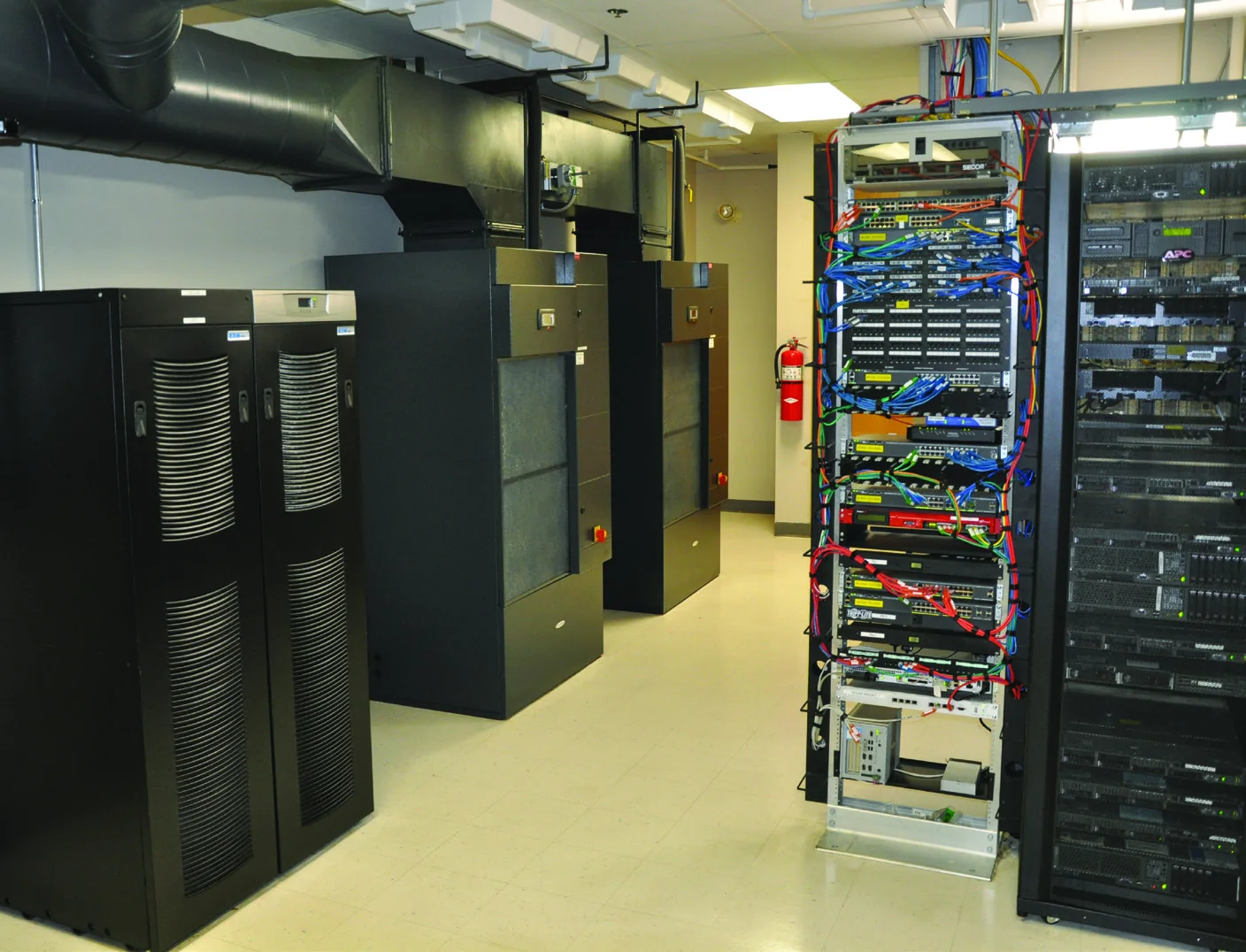
The Tustin Group installed two computer-room air-conditioning, or CRAC, units sized and positioned for the server equipment. The units included humidity alerts and online monitoring capabilities.
Because a raised-floor system was not practical within the existing room, The Tustin Group designed a passive air-distribution approach. This configuration directed conditioned air toward the server equipment while also supporting occupant comfort within the space.
The dedicated cooling strategy gave the server room greater environmental control than the previous shared air-conditioning arrangement.
Learn more about The Tustin Group’s commercial energy solutions for building controls, monitoring and facility-performance applications.
Power Resilience and Facility Risk Controls
The project’s power-resilience design used uninterruptible power supplies with approximately 20 minutes of documented battery capacity during the transition to an onsite diesel generator.
Alerting and online monitoring also provided visibility into UPS operating conditions.
Pepco separately completed IT and electrical work that included dual power-feed paths, additional network switches, server racks and smart power-distribution equipment.
That distinction is important to the project record. The separate IT and electrical improvements remain identified as Pepco’s responsibility rather than being attributed entirely to The Tustin Group.
Integrated Data Center Monitoring and Remote Diagnostics
Tustin Energy Solutions designed and installed an automation system that was incorporated into the facility’s existing chiller-plant platform.
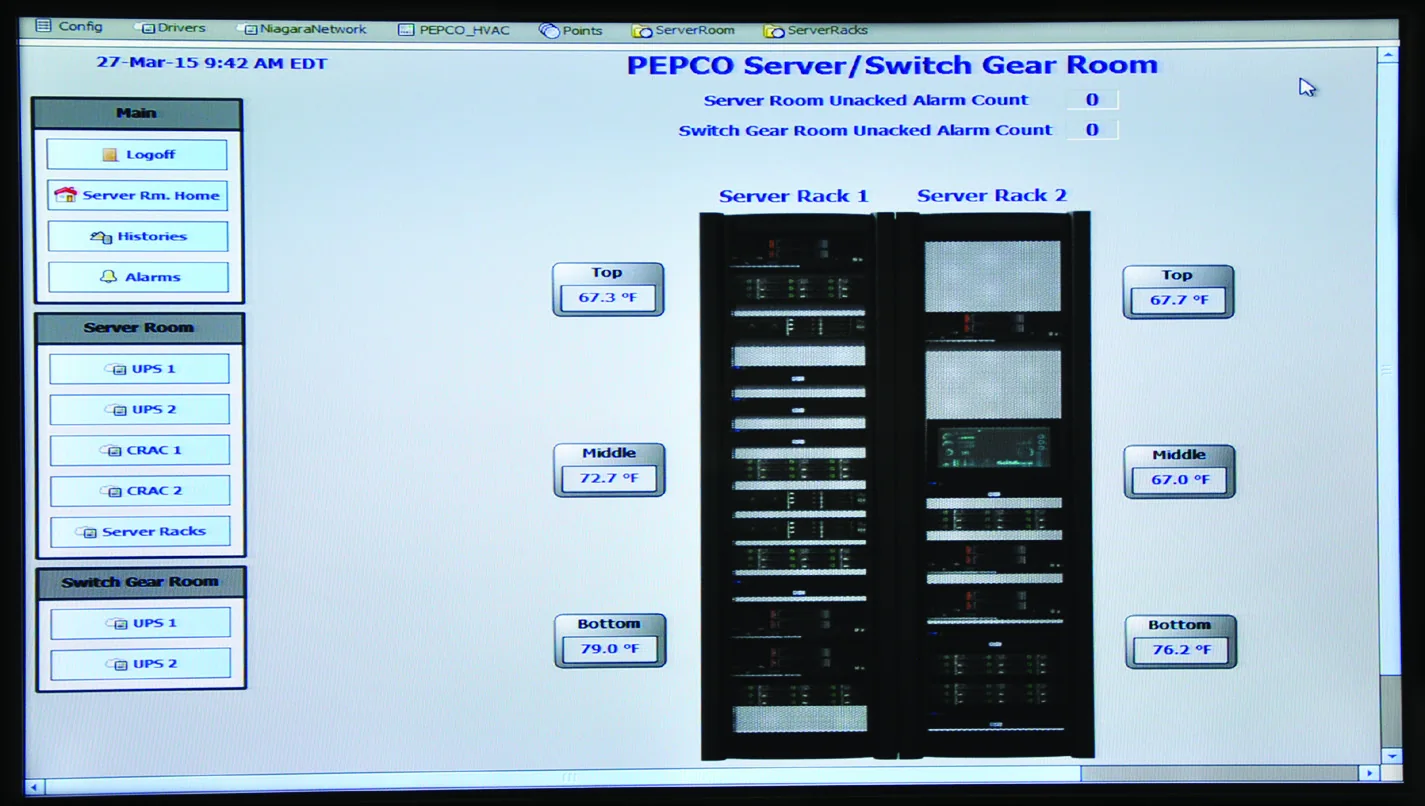
Operators could review server-rack temperatures, room conditions, cooling-equipment status and UPS information from a centralized interface.
Each server rack included three temperature zones that supplied real-time information to the monitoring system. Alarm notifications and remote diagnostics also gave the operations team visibility that the original project source says had not previously been available.
Centralized monitoring helped bring cooling, temperature conditions, power information and alarms into a more coordinated operational view.
For additional information about commercial building systems, controls, HVAC and facility performance, visit The Tustin Group’s News & Trends resource center.
A More Controllable Server-Room Layout
Tustin Construction Services coordinated the walls and doors for a reconfigured 800-square-foot server room.
The smaller, more controlled layout reduced the amount of space requiring precision conditioning. This allowed the dedicated cooling equipment to focus more directly on the server-room environment.
Pepco also separated its metering and billing systems from plant operations. Consequently, plant maintenance or a plant-side outage would be less likely to interrupt data collection.
Why Dedicated Data Center Cooling Matters
Server rooms create different operating requirements than conventional occupied office spaces. Equipment loads can remain active continuously, while temperature and humidity conditions may need closer monitoring.
A cooling system that also serves unrelated occupied areas may have difficulty responding independently to the conditions inside a dedicated equipment room.
In this project, dedicated CRAC equipment, temperature-zone monitoring and a more controlled server-room layout gave operators greater visibility into the environment supporting Pepco’s critical systems.
How the Pepco Data Center Upgrade Improved System Visibility
The project brought several operating conditions into one monitoring environment.
Operators could review rack temperatures, cooling equipment, room conditions, UPS information and alarm status through the integrated interface.
Real-time temperature information came from three monitored zones on each server rack. In addition, remote alarms and diagnostics provided another layer of visibility for facility personnel.
The documented benefit was not simply additional data. Instead, the project made important cooling, power and environmental information easier for operators to review from a coordinated system.
Documented Project Capabilities
The original case study documents the installed equipment and resulting system capabilities rather than presenting estimated financial savings.
The completed project included dedicated precision cooling, humidity alerts, UPS and generator-transition capability, real-time rack monitoring, centralized system visibility, remote alarm notification and diagnostics.
The original project source does not provide audited energy savings, a quantified reduction in downtime or a realized financial payback. Therefore, those outcomes are not attributed to this project.
Pepco Data Center Upgrade FAQs
Where was the Pepco data center project completed?
The project was completed at Pepco Energy Services’ Midtown Thermal Control Center in Atlantic City, New Jersey.
What cooling equipment did The Tustin Group install?
The Tustin Group installed two computer-room air-conditioning units sized and positioned to provide dedicated cooling for the server equipment.
Did the CRAC units include humidity monitoring?
Yes. The documented CRAC installation included humidity alerts and online monitoring capabilities.
How was server-rack temperature monitored?
Each server rack had three monitored temperature zones that supplied real-time data to the integrated monitoring system.
How much UPS battery capacity was documented?
The original case study documents approximately 20 minutes of UPS battery capacity during the transition to the onsite diesel generator.
Could facility operators monitor the data center remotely?
The project included alarm notifications and remote diagnostic capabilities. Operators could also review rack temperatures, room conditions, cooling equipment and UPS status through the integrated system.
How large was the reconfigured server room?
Tustin Construction Services coordinated walls and doors for a reconfigured server room measuring approximately 800 square feet.
How long did the documented project take?
The original project documentation identifies a duration of approximately four months.
Did the project document energy savings or financial payback?
No quantified energy savings, downtime reduction or realized financial payback are provided in the original project source. The case study documents the installed scope and resulting system capabilities.
Planning a Building-Controls or Critical-Cooling Upgrade?
Critical spaces depend on reliable cooling, resilient power infrastructure, accurate monitoring and clear system visibility.
Talk with The Tustin Group about precision cooling, building controls, remote monitoring and coordinated facility upgrades for your commercial property.