
 Store
StoreMechanical services / Capital planning guide
Commercial HVAC Equipment Life Expectancy and Replacement Planning
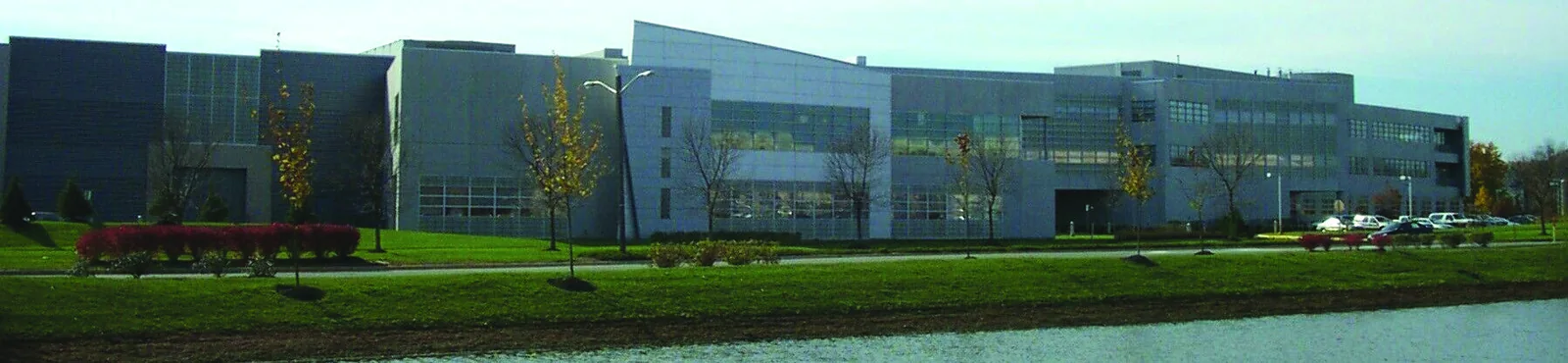
Use service-life evidence and equipment condition to prioritize work, compare repair with replacement, and build a practical five-year capital plan.
Commercial HVAC equipment should be evaluated using its condition, reliability, service support, operating performance, and consequence of failure. A useful capital plan turns those observations into dated decisions and complete project budgets.
How long does commercial HVAC equipment last?
There is no single life expectancy for commercial HVAC. Rooftop units, air handlers, chillers, boilers, pumps, and controls operate under different conditions and have different failure modes. A well-maintained unit with available parts may remain serviceable while a younger asset becomes a priority because of deterioration, recurring failures, or a changed building requirement.
ASHRAE’s public database distinguishes equipment currently in service from equipment that has been replaced. That distinction matters: the age of equipment still running is not its completed service life. The selected records below are reported median ages at replacement, not a recommended replacement schedule.
| Reported equipment category | Median age at replacement | Replaced units in the reported category |
|---|---|---|
| Packaged DX unit, rooftop | 22 years | 5 |
| Air handling unit, variable air volume | 26 years | 69 |
| Chiller, centrifugal | 25 years | 30 |
| Boiler, steel water-tube, forced draft, hot water | 21 years | 14 |
Sources: ASHRAE database categories for air distribution, cooling, and heating, with no other filters applied. Samples differ in size and site conditions; several are small. These are descriptive observations from the database, not a representative estimate for every building or a prediction for any individual asset.
Use this kind of reference to start a discussion, then check the manufacturer’s guidance, field condition, repair history, and service environment. Do not assume that a unit below a published benchmark is low risk, or that a unit above it must be discarded.
What should an HVAC equipment assessment include?
Begin with an asset register that identifies each unit, the area it serves, model and serial number, installation date or best documented estimate, capacity, refrigerant or fuel, and connected controls. Record the source and confidence of uncertain information rather than filling gaps with assumptions.
| Assessment area | Evidence to gather | Planning implication |
|---|---|---|
| Physical condition | Inspection findings, corrosion, leaks, vibration, wear, and unresolved defects. | Determine what requires investigation, repair, or a replacement study. |
| Reliability | Service calls, failures, repeat repairs, and actual downtime. | Identify recurring problems and whether prior corrections worked. |
| Operational consequence | Critical spaces, redundancy, available capacity, and contingency arrangements. | Distinguish an inconvenience from an interruption the business cannot tolerate. |
| Supportability | Parts availability, supplier support, control-platform support, and repair lead times. | Identify dependencies that could make an otherwise repairable failure disruptive. |
| Performance and fit | Comfort, load changes, operating trends, energy use, and current building needs. | Check whether the system can still serve the required duty. |
| Project readiness | Design needs, access, structural or electrical dependencies, and outage windows. | Allow enough time to execute work before the required operating season. |
Ask the assessor to separate observed facts, unresolved questions, and recommendations. A failed component should have a corrective action, an owner, and a target date. Safety concerns or loss of essential service need immediate professional attention through the facility’s response process; they should not wait for an annual capital meeting.
A simple way to organize the findings
- Act now: an identified condition requires prompt action or an immediate contingency decision.
- Plan near-term work: evidence supports investigation, design, or replacement funding in the next budget window.
- Monitor and maintain: continue the required maintenance and track defined condition indicators.
- Resolve an information gap: commission a test, inspection, or documentation review before assigning a replacement year.
These are planning labels, not an engineering safety rating or a formula that predicts failure. The responsible technical team should explain the evidence behind each classification.
How should owners compare repair and replacement?
Compare alternatives over the same study period and service requirement. Include the proposed repair, the likely follow-on work, the operating implications, and what the repair would leave unresolved. A replacement option should include the complete installed project, not only the price of the equipment.
- Equipment, engineering, and applicable permit or inspection costs.
- Removal, lifting, access, temporary services, and disposal.
- Required electrical, structural, piping, ductwork, or controls changes.
- Testing, balancing, commissioning, training, and documentation.
- Maintenance, expected repair exposure, energy assumptions, and residual value over the study period.
- Contingency, quote date, exclusions, and uncertainty in the estimate.
The Department of Energy’s building life-cycle cost resources support comparison of alternatives that have different initial and future costs. Use a consistent financial basis and sensitivity analysis for uncertain inputs. Simple payback can help screen an option, but it does not represent every ownership cost or operational consequence.
Keep sunk costs separate: money already spent on previous repairs is evidence of history, not a future expense that must be paid again. Likewise, do not count the same avoided maintenance or energy benefit twice. Define ongoing coverage with a commercial HVAC service agreement. For the operating side of the analysis, use the commercial HVAC maintenance budgeting guide.
How to build a five-year HVAC capital plan
Make each line item traceable from a field finding to a decision. Assign a planning year, budget range or quoted amount, scope assumptions, dependencies, owner, and a date to review the estimate. Mark unverified numbers as preliminary.
| Planning window | Decision or work | Evidence needed before commitment |
|---|---|---|
| Immediate / Year 1 | Resolve urgent findings; complete assessments and enabling design. | Documented condition, operating impact, and a defined response. |
| Years 1–2 | Execute the highest-priority funded projects. | Validated scope, current proposals, access plan, and approval. |
| Years 2–3 | Coordinate dependent mechanical and controls work. | Compatibility review, updated condition, and realistic outage windows. |
| Years 4–5 | Maintain a provisional forecast for later projects. | Explicit assumptions and a scheduled reassessment before procurement. |
| Every annual review | Refresh priorities, estimates, completed work, and emerging risks. | New service history, asset changes, and budget-versus-actual records. |
Work backward from the date the facility needs the equipment operating. Include assessment, design, approvals, purchasing, delivery, installation, and verification. Confirm actual lead times with the project team; avoid assigning a universal delivery period to an equipment category.
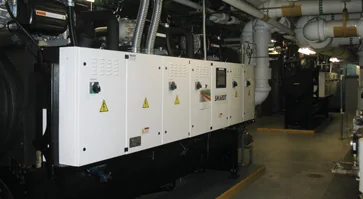
Project example: NFL Films chiller upgrade
Tustin’s documented NFL Films project in Mount Laurel, New Jersey, involved two 450-ton replacement chillers and improved redundancy. It is a useful example of considering operational continuity and system configuration as part of a replacement decision.
The case study also reports a 10–12% reduction in monthly electricity consumption. That is a historical, source-reported result for this project, not a forecast for another building.
Read the NFL Films chiller upgrade case studyCommon questions about HVAC life expectancy
Should all equipment of the same age be replaced together?
No. Condition, duty, repair exposure, available capacity, and the effect of a failure can differ between assets. Group work when it makes operational and economic sense, and record the reason.
Can replacing a compressor extend the life of the entire unit?
It may restore that component’s function, but it does not reset the condition of coils, casing, controls, fans, or other parts. Evaluate the remaining system before treating a major repair as a long-term solution.
Does a refrigerant transition automatically require replacement?
Do not make that assumption. Review the specific equipment, refrigerant, service options, and current applicable requirements with qualified professionals. Separate a legal requirement from a cost or supportability concern.
Should controls be reviewed during mechanical replacement?
Yes. Compatibility, sequences, sensors, alarms, and commissioning can affect project scope. The building automation upgrade guide explains how to organize those decisions.
Related guides and services
 Commercial HVAC maintenance costsBuild your budget and compare agreement coverage.Explore this resource
  Building automation upgradesCompare integration, modernization, and replacement.Explore this resource Commercial HVAC service agreementsExplore maintenance coverage for your facility.Explore this resource
 Turn equipment concerns into a clear plan.
Tustin’s mechanical services include building assessments, capital planning, retrofits, and system replacement. Start with the assets and operating priorities you need to evaluate.
Discuss an equipment assessmentFind your local Tustin teamSources and further reading
- ASHRAE HVAC Service Life Database — the table above identifies the specific category queries and replaced-equipment sample sizes.
- U.S. Department of Energy: Building Life Cycle Cost Programs.
- The Tustin Group: NFL Films Chiller Upgrade, with the original project PDF available on the case-study page.
This guide supports planning. Asset condition, remaining service life, design, safety, and investment decisions require a facility-specific assessment.