 Store
Quick answer: Commercial heating system maintenance is a planned inspection, cleaning, adjustment, testing, and documentation process that helps a building prepare for colder weather. A useful pre-winter review covers boilers and hydronic equipment, rooftop units, furnaces, heat pumps, pumps, air handlers, filters, controls, safety devices, distribution, freeze protection, and service records. The exact work depends on equipment type, manufacturer instructions, building use, climate, and the requirements adopted for the property.
Why is commercial heating maintenance important?
Heating equipment often sits underused during warmer months, while winter exposes every weak point at once. A failed burner, dirty filter, stuck damper, low-water condition, leaking valve, failed sensor, or control-sequence problem can affect comfort, indoor air quality, operations, and occupant safety. Preventive maintenance gives the facility team time to find deficiencies before the first cold-weather emergency.
The U.S. Department of Energy’s Better Buildings program identifies preventative maintenance as a way to support reliable commercial HVAC performance. Use that guidance as context, but follow the equipment manufacturer, qualified service professional, adopted requirements, and facility-specific operating plan.
Commercial heating system maintenance checklist
| System area | Pre-winter checks to discuss | Record for the facility |
|---|---|---|
| Boiler or hydronic system | Combustion and safety controls, operating conditions, pumps, valves, expansion components, leaks, water quality, and distribution. | Readings, deficiencies, repairs, and date returned to service. |
| Rooftop unit or furnace | Filters, belts, bearings, burners, heat exchanger condition, safeties, flues or venting, dampers, and airflow. | Unit ID, filter size, measured conditions, parts replaced, and recommendations. |
| Heat pump or electric heat | Heating mode, defrost operation, backup heat, coils, fans, refrigerant-related concerns, controls, and alarms. | Operating mode, fault history, and required follow-up. |
| Air handler and distribution | Coils, filters, fans, dampers, insulation, freeze protection, condensate paths, and accessible duct or terminal conditions. | Airside deficiencies, access issues, and balancing or repair needs. |
| Controls and BAS | Schedules, sensors, setpoints, sequences, alarms, overrides, trend data, and communication. | Changed settings, outstanding alarms, and responsible owner. |
Boiler and hydronic heating maintenance
For boilers and hydronic systems, the service plan should address the equipment type and the manufacturer’s requirements. Discuss combustion and safety controls, operating pressure and temperature, relief and low-water protection, pumps, valves, expansion components, leaks, strainers, and water-treatment conditions with a qualified professional. Confirm that the distribution system can deliver heat to the areas that need it and that isolation valves are accessible and labeled.
Do not treat a boiler-room walk-through as a complete maintenance visit. A clear record should identify the equipment, measurements taken, defects found, immediate risks, recommended repairs, and the condition in which the system was left.
Rooftop units, furnaces, and unit heaters
Rooftop and packaged heating equipment should be reviewed as both heating appliances and air-moving systems. Check filters, belts, bearings, fans, burners, heat-exchanger concerns, safeties, dampers, outside-air settings, venting, and access panels. Confirm that equipment identification is legible and that service clearances have not been blocked by storage, renovations, or rooftop additions.
Replace filters according to the operating plan and equipment requirements, not simply because a calendar reminder says so. A filter that loads quickly may indicate an indoor-air-quality issue, construction dust, poor fit, or a maintenance interval that does not match the building’s use.
Heat pumps and electric heat
Heat pumps should be checked in heating mode, including defrost operation, outdoor coils, fans, controls, alarms, and backup or supplemental heat where installed. Electric resistance heat requires attention to staging, electrical connections, safeties, airflow, and control signals. If the equipment is showing repeated faults, short cycling, poor discharge temperatures, or unusual noise, document the symptoms and have a qualified technician diagnose the cause.
Controls, sensors, and building automation
A mechanically sound system can still perform poorly when controls are wrong. Review schedules, occupied and unoccupied setpoints, sensor locations, valve and damper response, freeze protection, alarm routing, overrides, and sequences of operation. Remove temporary overrides after work is complete and confirm that alarms are assigned to someone who can act on them.
Facility managers comparing controls platforms may also find Tustin Group’s guide to BAS vs. BMS vs. EMS building control systems useful. The goal is not to add technology for its own sake; it is to make operating conditions visible and actionable.
Air handlers, filters, and distribution
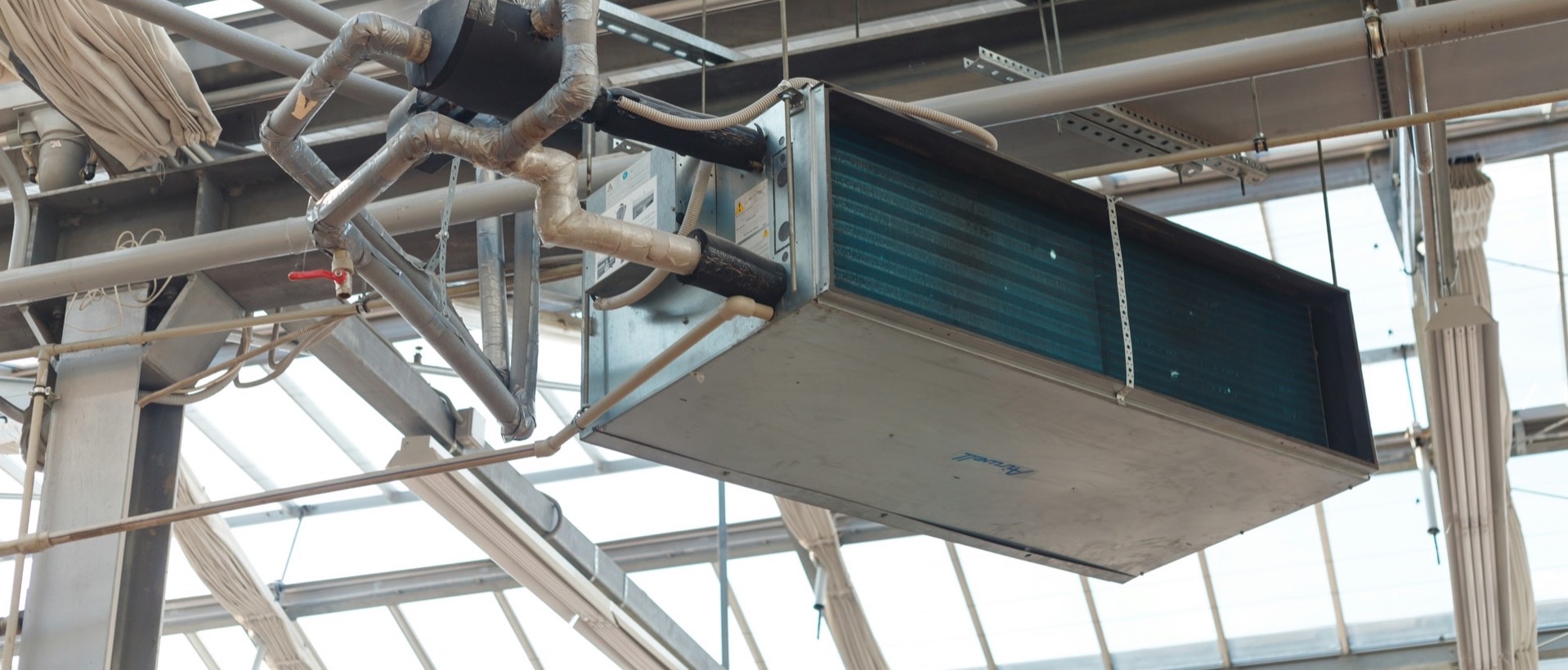
Air handlers distribute heat throughout the building, so they deserve their own review. Inspect accessible coils, filters, fans, belts, dampers, insulation, freeze protection, condensate paths, access doors, and signs of leakage or corrosion. Confirm that terminal units and zones are responding to the control signal and that comfort complaints are not being masked by setpoint changes.
For a more focused airside reference, see the commercial air handler maintenance checklist. Record blocked access, damaged insulation, unusual vibration, restricted airflow, and any conditions that require a separate repair scope.
Service records and winter readiness
Good records make maintenance more useful. Keep an equipment list, model and serial information, filter schedule, maintenance history, test results, open deficiencies, warranty details, and emergency contacts. Rank repairs by safety, reliability, comfort, energy, and business impact. If a critical unit has no backup, identify the escalation plan before winter weather arrives.
A planned agreement can help coordinate recurring inspections, response expectations, documentation, and budgeting. Compare service scope carefully with Tustin Group’s commercial HVAC service agreement buyer’s guide. For a building review or service discussion, contact Tustin Group with the property type, equipment list, location, and main concern.
Before-winter heating maintenance checklist
- Confirm the equipment inventory and identify critical or single-point-of-failure units.
- Schedule qualified inspections early enough to complete repairs before cold weather.
- Review boiler, rooftop, furnace, heat-pump, air-handler, pump, and control conditions.
- Test operating modes, safeties, alarms, schedules, and freeze-protection sequences as appropriate.
- Replace or clean filters according to equipment and operating requirements.
- Verify access, labels, clearances, combustion-air or ventilation conditions, and housekeeping.
- Update emergency contacts, service records, spare-parts information, and temporary-heating plans.
- Close out or formally accept open deficiencies before the building enters peak heating demand.
Frequently asked questions
How often should commercial heating equipment be serviced?
The correct frequency depends on equipment type, use, manufacturer instructions, environment, code, and the facility’s risk tolerance. Many buildings use seasonal or recurring service visits, but the maintenance plan should be based on the actual equipment and operating history.
What is the best time to schedule heating maintenance?
Schedule the primary pre-winter review before heating demand begins, leaving time for parts, repairs, controls work, and any required testing. Critical facilities may need more frequent condition checks.
Does heating maintenance reduce energy use?
Maintenance can help equipment operate as designed and can reveal control, airflow, combustion, or distribution problems that waste energy. Savings are not guaranteed; measure performance and correct the underlying issue.
Can facility staff perform all heating maintenance?
Facility staff can handle visual checks, housekeeping, filter procedures, alarm review, and documentation when trained and authorized. Combustion, electrical, refrigerant, safety, control, and code-related work should be assigned to qualified professionals.
This article is educational information for commercial facility managers. It does not replace manufacturer instructions, an adopted code, an emergency plan, or a qualified HVAC professional’s evaluation.
Leave a Reply