 Store
HVAC automation controls connect sensors, controllers, equipment, schedules, alarms, and software so a commercial building can respond to changing loads. They help operators coordinate heating, cooling, ventilation, humidity, equipment protection, and energy goals across multiple zones or systems.
Automation does not mean that every building needs the most complicated platform. The best system is understandable, serviceable, secure, and matched to the equipment and the facility team. A clear sequence of operation matters more than a crowded dashboard.
HVAC automation controls: quick answer
HVAC automation controls use programmed logic to monitor conditions and adjust equipment. A typical sequence reads temperature, pressure, airflow, occupancy, humidity, or outdoor conditions, then commands valves, dampers, fans, compressors, boilers, pumps, or variable frequency drives.
How HVAC automation works
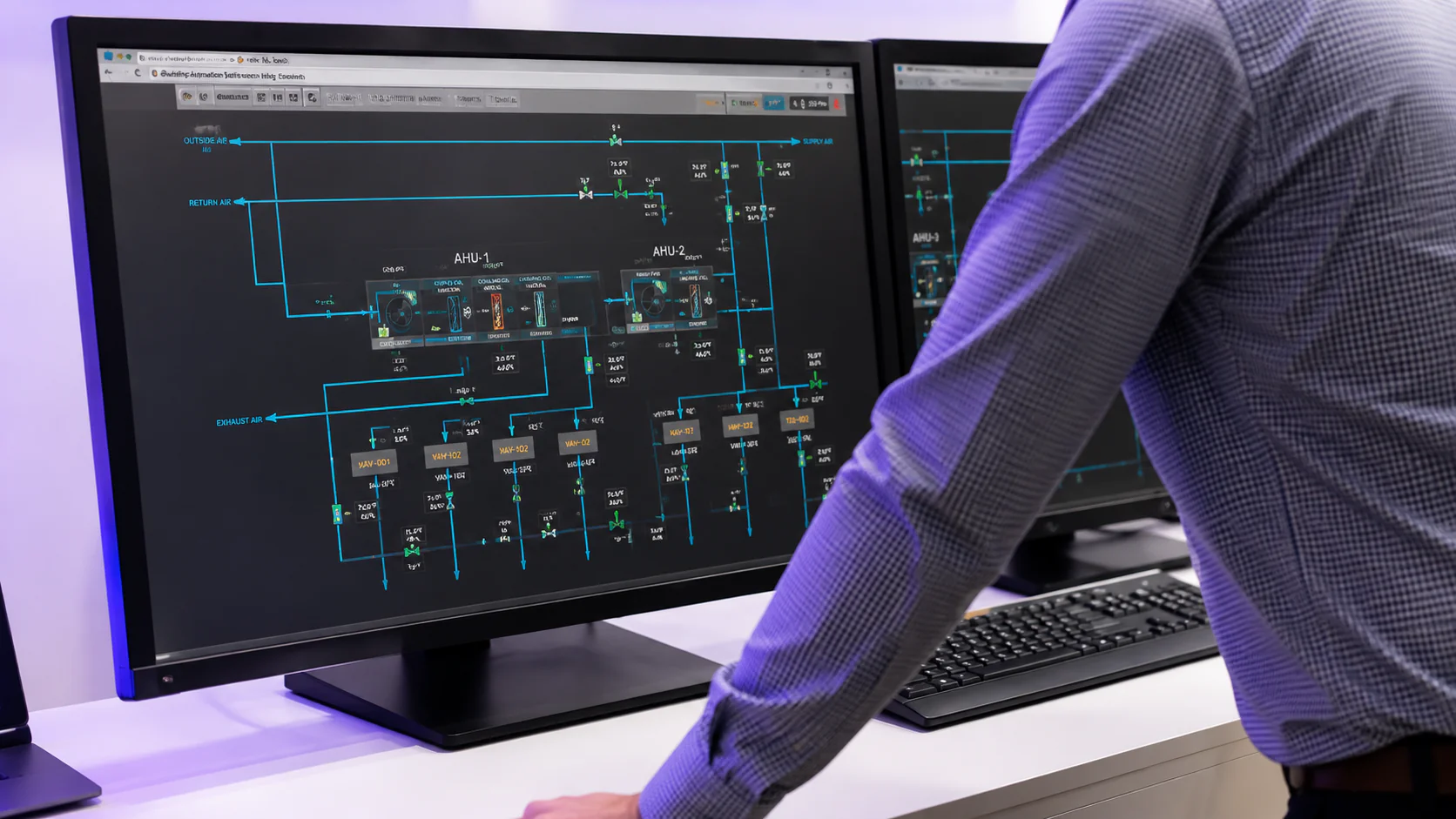
Field sensors provide data. A controller compares that data with setpoints and schedules. The system then sends commands to actuators, relays, drives, and equipment. Supervisory software displays the results, trends the conditions, and notifies staff when the system detects an abnormal condition.
For example, an air-handling unit may use outdoor temperature and mixed-air temperature to decide when an economizer can provide cooling. A static-pressure sensor can help a fan adjust speed. A zone sensor can request heating or cooling. A fault alarm can tell the operator when a damper command does not match feedback.
Benefits for commercial facilities
- Consistency: repeat the intended sequence across schedules, zones, and equipment.
- Visibility: give operators trends, alarms, runtime, and system status.
- Efficiency: match output to demand instead of running every device at full capacity.
- Comfort: reduce hot and cold complaints by correcting sequence and sensor problems.
- Maintenance: identify abnormal runtime, cycling, pressure, temperature, and equipment response.
- Planning: use historical data to prioritize upgrades and commissioning.
Common automation sequences
Occupied and unoccupied modes
Schedules establish when the building is occupied, but facility teams should include holidays, events, tenants, cleaning, and early-start needs. Operators should be able to see and change schedules without creating permanent overrides.
Supply-air and static-pressure reset
Reset strategies can reduce fan and conditioning energy when zones do not need maximum airflow. The sequence should protect comfort, ventilation, equipment limits, and indoor air quality.
Temperature and pressure alarms
Alarms should identify actionable conditions rather than create noise. Use clear thresholds, delay timers, priorities, and escalation paths. Review alarm history so repeated events lead to a root-cause investigation.
Equipment staging
Multiple boilers, chillers, pumps, rooftop units, or air handlers can stage based on load and runtime. The sequence should rotate lead equipment, manage minimum run times, and protect equipment from rapid cycling.
Implementation checklist
- Document the equipment, points list, network, sequences, schedules, and current overrides.
- Confirm sensor location, range, calibration, labels, and trend history.
- Write plain-language sequences that operators can understand.
- Prioritize alarms that require action and define who responds.
- Test command, feedback, safety, interlock, and fail-safe behavior.
- Commission the system in occupied and unoccupied modes.
- Train facility staff and leave current drawings, backups, passwords, and service contacts.
Review The Tustin Group’s building automation system upgrades guide, commercial HVAC service agreement buyer’s guide, and variable frequency drive guide for related facility planning.
When to upgrade HVAC automation controls
Consider an upgrade when the system depends on manual overrides, the controls vendor no longer supports the platform, alarm history is unavailable, sensors drift, operators lack remote visibility, or equipment changes have outgrown the original sequence. Start with a point and sequence audit. Then prioritize changes that improve reliability, comfort, safety, and measurable energy performance.
Frequently asked questions
Are automation controls the same as a BAS?
HVAC automation controls are a major part of a building automation system. A BAS can also integrate lighting, energy meters, water systems, access, alarms, and other facility functions.
Do automation controls reduce maintenance?
They can help staff find abnormal conditions sooner, but automation does not replace preventive maintenance. Sensors, actuators, equipment, networks, and sequences still need inspection and service.
Who can maintain HVAC automation controls?
Controls technicians, HVAC technicians, engineers, commissioning specialists, and trained facility operators may share responsibility. The right team depends on the platform and the mechanical systems. The Tustin Group also offers HVAC technician career opportunities.
Make automation useful
HVAC automation controls work best when the facility team understands the sequence, the system provides trustworthy data, and service providers can support the platform. Contact The Tustin Group to discuss HVAC controls, automation, commissioning, or service.
Leave a Reply