 Store
Store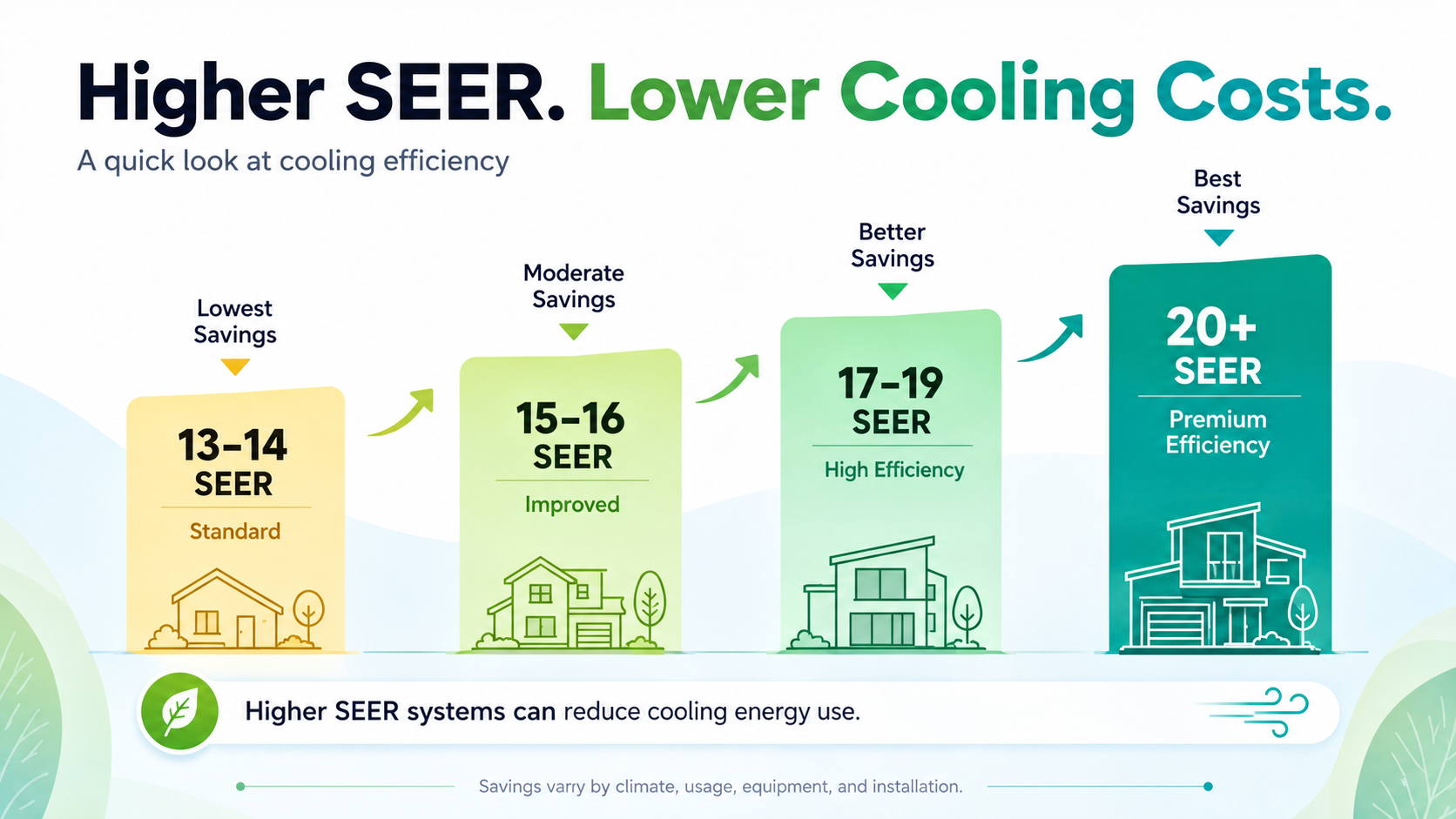
What Does SEER Mean in HVAC? A Practical Guide to Cooling Efficiency
If you are comparing air conditioners, heat pumps, rooftop units, or a mini split system, you will likely see a SEER rating listed with the equipment. So, what does SEER mean in HVAC? SEER stands for Seasonal Energy Efficiency Ratio. It helps measure how efficiently a cooling system uses electricity over a typical cooling season.
In simple terms, a higher SEER rating usually means the system can deliver more cooling while using less energy. However, SEER does not tell the whole story. Equipment size, ductwork, controls, maintenance, climate, runtime, and installation quality also affect real-world performance.
The Tustin Group is a single-source integrated building services company that supports mechanical, energy, water, fire, and life safety systems. Because of that, our team looks at SEER as one part of a larger building performance strategy.
What Is SEER?
If you are asking what is SEER, think of it like fuel economy for cooling equipment. A car with better miles per gallon uses less fuel. Similarly, an HVAC system with a higher SEER rating uses less electricity to produce cooling.
SEER compares seasonal cooling output to seasonal energy use. As a result, it gives building owners a way to compare cooling efficiency between different systems.
However, SEER works best as a comparison tool. It does not guarantee exact savings in every building.
How Is a SEER Rating Calculated?
A SEER rating compares the cooling a system provides during a typical season to the electricity it uses during that same period.
The basic idea is:
SEER = seasonal cooling output ÷ seasonal electrical energy input
Therefore, higher SEER equipment should use less electricity for the same cooling load. Still, field performance depends on the full installation.
For example, poor ductwork, dirty coils, weak airflow, bad controls, or incorrect sizing can reduce the benefit of a high-efficiency system.
What Is a Good SEER Rating?
A good SEER rating depends on the building, budget, climate, and expected runtime. For many properties, a mid-range high-efficiency system can offer a strong balance between upfront cost and long-term savings.
However, the best choice is not always the highest number. A premium system may cost more to install. Therefore, facility teams should compare energy savings, comfort needs, equipment life, rebates, and maintenance requirements before making a decision.
For commercial buildings, the right SEER rating should support both efficiency and reliability.
SEER vs. SEER2
Modern equipment may use SEER2 instead of the older SEER rating. SEER2 uses updated testing conditions that better reflect real-world system pressure and airflow.
Because of that, SEER2 numbers may look slightly lower than older SEER numbers for similar equipment. However, they can provide a more realistic view of expected performance.
Before selecting equipment, confirm the current efficiency requirements for your region and system type.
Why SEER Matters for Commercial Buildings
Commercial buildings often run cooling systems for long hours. As a result, small efficiency gains can matter over time.
A better-matched cooling system can help:
- Lower utility costs
- Improve comfort
- Reduce humidity problems
- Support quieter operation
- Improve temperature consistency
- Reduce unnecessary runtime
- Support long-term energy planning
In addition, efficient equipment can help facility teams manage operating costs across offices, schools, healthcare spaces, industrial buildings, retail centers, and multi-use properties.
SEER Is Not the Only Efficiency Factor
A high SEER rating can help, but it cannot fix a poor system design. Therefore, facility teams should evaluate the full building.
Important factors include:
- Equipment sizing
- Ductwork condition
- Airflow
- Coil cleanliness
- Refrigerant charge
- Filter maintenance
- Building insulation
- Occupancy schedules
- Controls programming
- Preventive maintenance history
For example, a high-efficiency system may still waste energy if the thermostat reads the wrong temperature. Likewise, poor thermostat wiring or a damaged thermostat wire can create communication issues between controls and equipment.
How Thermostats and Controls Affect SEER Performance
Cooling equipment performs best when controls give accurate signals. If a thermostat sits in the wrong location, reads temperature poorly, or uses outdated settings, the system may run too often.
In addition, loose thermostat wiring can cause short cycling, failed starts, or inconsistent comfort. Therefore, a technician should inspect controls when evaluating equipment performance.
Modern thermostats and building controls can help manage schedules, setbacks, humidity, and occupied hours. As a result, they can help the system use its SEER rating more effectively.
RTU HVAC Systems and SEER Ratings
Many commercial buildings use rooftop units. You may see these called RTU HVAC systems. These units often combine heating, cooling, ventilation, fans, filters, and controls in one packaged system.
For rooftop units, SEER rating matters. However, so do airflow, economizer operation, curb condition, controls, filter access, maintenance history, and ventilation requirements.
A rooftop unit with a good SEER rating can still perform poorly if dampers fail, coils clog, or controls fall out of calibration. Therefore, a proper evaluation should include both equipment efficiency and operating condition.
Mini Split Systems and SEER
A mini split system can provide efficient cooling for smaller zones, offices, server rooms, additions, or areas that need independent temperature control. Many mini split systems offer strong SEER ratings because they use inverter-driven technology.
However, proper design still matters. The indoor unit must match the space. The outdoor unit must have proper clearance. The drain line must work correctly. In addition, controls must match the room’s real usage.
A mini split system can solve comfort problems in the right application. Still, it should fit into the building’s larger mechanical plan.
Higher SEER Can Also Improve Comfort
Higher SEER systems often use better compressor technology. For example, two-stage and variable-speed systems can adjust output instead of running only at full power.
That can improve comfort because the system may run longer at lower speeds. As a result, it can provide steadier temperatures, better humidity control, and quieter operation.
However, these systems also rely on more advanced controls. Therefore, installation quality, sensor accuracy, and control setup matter.
When Higher SEER May Not Pay Off
A higher SEER rating usually costs more upfront. Because of that, the payback depends on how often the building uses cooling.
Higher SEER may make more sense when:
- Cooling runs for long periods
- Utility rates are high
- The building has comfort complaints
- Humidity control matters
- The owner plans to keep the system for many years
- Rebates or incentives apply
- Existing equipment wastes energy
However, a lower-cost system may make more sense for limited-use spaces or shorter ownership timelines. A commercial HVAC provider can help compare options.
Look Beyond HVAC Equipment
Commercial buildings rely on many connected systems. HVAC, lighting, plumbing, security, and life safety can all affect comfort and operations.
For example, access control systems may influence occupancy patterns. Those patterns can affect HVAC schedules and ventilation needs. In the same way, lighting upgrades may reduce heat load in certain rooms.
If your team recently reviewed how to install a dimmer switch, that same conversation may connect to broader energy planning. Lighting, controls, and HVAC should work together instead of operating in isolation.
When to Search for HVAC Service Near Me
If you are searching for HVAC service near me, your system may already show signs of poor performance. Common warning signs include rising utility bills, uneven temperatures, weak airflow, humidity problems, frequent cycling, and repeated repairs.
For businesses, commercial HVAC service near me should lead to more than a quick repair. A qualified provider should evaluate the equipment, controls, airflow, maintenance history, and energy use.
The Tustin Group helps facility teams connect those details so they can make better decisions.
Why Choose The Tustin Group?
The Tustin Group helps commercial and institutional clients manage building performance through integrated services. Our team supports mechanical, energy, water, fire, and life safety systems.
That matters because HVAC efficiency does not come from the equipment alone. It comes from design, installation, controls, service, and long-term planning.
When evaluating SEER ratings, The Tustin Group can help facility teams understand how the system fits the building, budget, and comfort goals.
Final Takeaway: What Does SEER Mean in HVAC?
So, what does SEER mean in HVAC? It measures seasonal cooling efficiency. A higher SEER rating can reduce energy use, improve comfort, and support long-term operating savings.
However, SEER should not be the only deciding factor. The right system must match the building, climate, occupancy, controls, and maintenance plan.
For commercial properties, The Tustin Group can help evaluate HVAC equipment, review controls, compare efficiency options, and recommend a smarter path toward reliable building performance.
Explore More DIY Building Maintenance Guides
Looking for more practical DIY guides from The Tustin Group? Visit our News & Trends page for current building maintenance insights and helpful facility topics.
You can also read our guide on how to install a dimmer switch to learn how dimmer switches work, what wiring details to check, and when to call a professional for code-sensitive electrical work.
For another practical plumbing topic, read How to Fix a Running Toilet to learn what causes a toilet to keep running, which parts to check first, and when commercial plumbing support makes sense.
FAQ: What Does SEER Mean in HVAC?
What is a good SEER rating?
A good SEER rating depends on the building, climate, budget, and cooling demand. In many cases, mid-range high-efficiency equipment provides a strong balance of cost and energy savings.
What is SEER?
SEER stands for Seasonal Energy Efficiency Ratio. It compares cooling output to energy use over a typical cooling season.
Is a higher SEER rating always better?
Not always. A higher SEER rating can lower energy use, but it also costs more upfront. The best choice depends on usage, utility rates, comfort goals, and expected payback.
Does SEER affect comfort?
Yes, it can. Higher SEER systems often use two-stage or variable-speed technology. As a result, they may provide steadier temperatures, better humidity control, and quieter operation.
Does thermostat wiring affect HVAC efficiency?
Yes. Faulty thermostat wiring can cause poor communication between the thermostat and HVAC equipment. That can lead to short cycling, longer runtime, or inconsistent comfort.
Does a mini split system have a SEER rating?
Yes. A mini split system usually includes a SEER or SEER2 rating. Many mini splits offer strong efficiency because they use inverter-driven technology.
What does RTU HVAC mean?
RTU HVAC means rooftop unit HVAC. These packaged systems often serve commercial buildings and may include heating, cooling, ventilation, fans, filters, and controls.
When should I call The Tustin Group?
Call The Tustin Group when your building has rising utility costs, comfort complaints, aging HVAC equipment, control issues, or questions about system efficiency. A professional review can help you choose the right next step.
Leave a Reply